Recent Posts

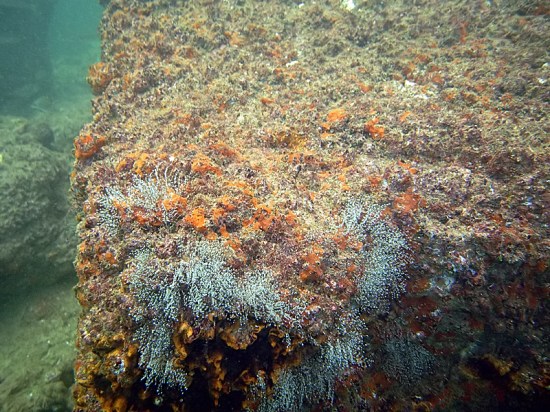
Metagenomic sequencing of marine periphyton: taxonomic and functional insights into biofilm communities

Metagenomic sequencing of marine periphyton: taxonomic and functional insights into biofilm communities Front. Microbiol., 29 October 2015 Sec. Aquatic Microbiology Volume 6 – 2015 | https://doi.org/10.3389/fmicb.2015.01192 Kemal Sanli1Johan Bengtsson-Palme2R. Henrik Nilsson1Erik Kristiansson3Magnus Alm Rosenblad4Hans Blanck1Karl M. Eriksson5* Full Article Available. We conclude that marine periphyton communities harbor a vast diversity of organisms and metabolic strategies. https://doi.org/10.3389/fmicb.2015.01192

Higher-order interactions stabilize dynamics in competitive network models

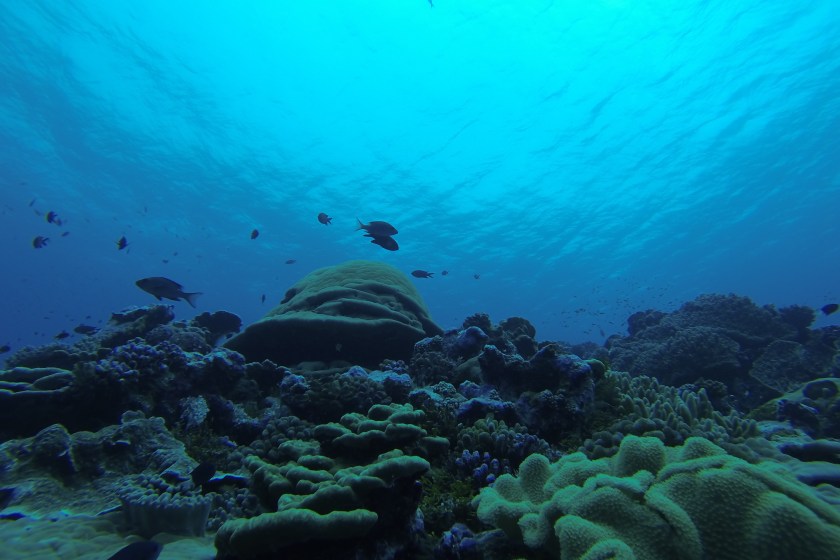
Higher-order interactions stabilize dynamics in competitive network models Jacopo Grilli, György Barabás, Matthew J. Michalska-Smith, Stefano Allesina Nature 548, 210–213 (10 August 2017) doi:10.1038/nature23273 There’s no PDF available, but this is too good not to include here. Reef-oriented microbial communities in the wild are large and stable. Read that twice and then read on to the quote from the article. 🙂 […]

Velvet (Amyloodinium) infections in fish can easily be avoided.

“5. Conclusions

Our results indicate that infestations of […] the gill parasite A. ocellatum can be avoided if a defined pattern of water quality is kept within production ponds with a defined fish stocking level. This pattern of water quality can be achieved by water renewal with night tides, which should be carried out by considering the dissolved oxygen values in production ponds.”

What?

Velvet can be avoided. 
It is not inevitable. 
Even in a scenario where it’s commonplace.

How?

Stocking levels matter.
Water quality (not our definition*) matters.

This is something I (and others) have been stating for years — mostly against stiff opposition in social media forums.  (Folks who generally see infections as inevitable and chemical treatments as mandatory….which they are if you don’t know or heed this info.)